
Reading time: 12 minutes.
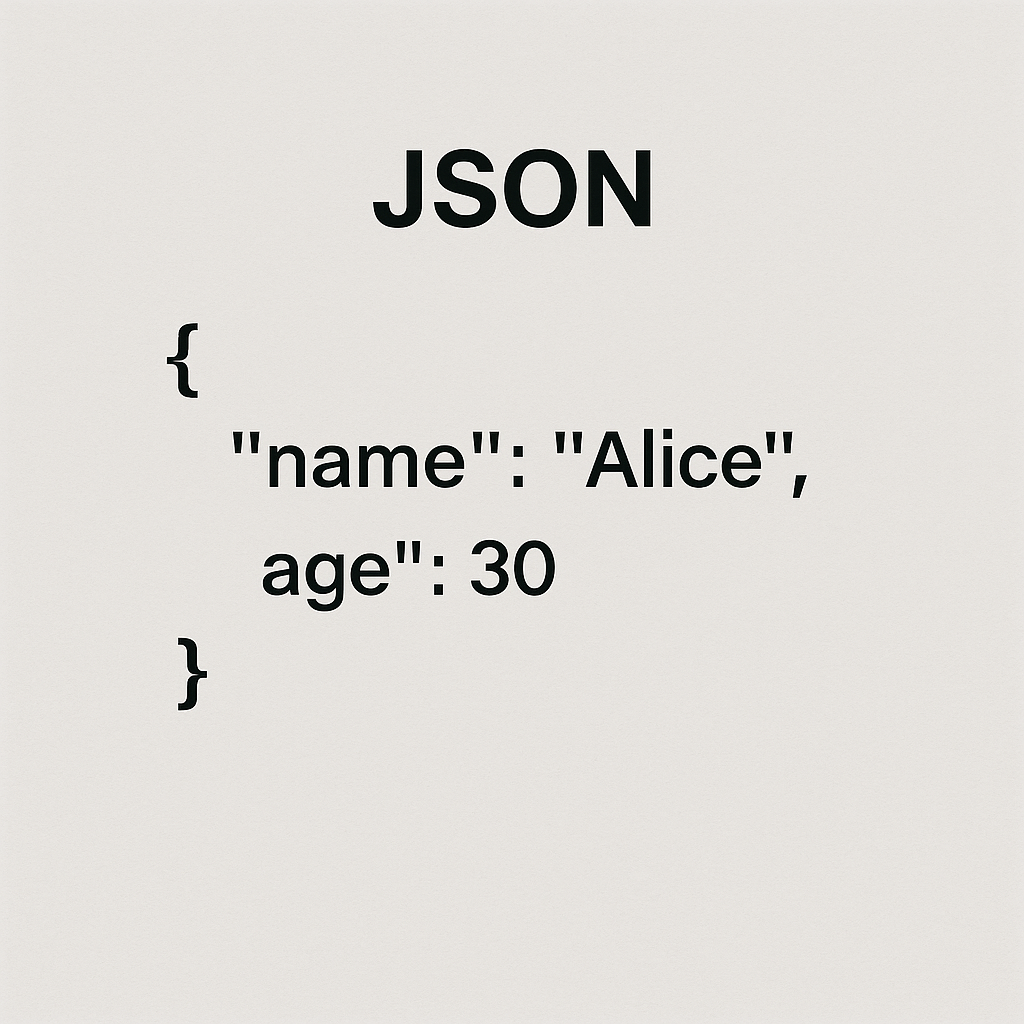
If you’ve worked with web technologies at any point in the last twenty years, you’ve almost certainly encountered JSON. It shows up in APIs, configuration files, logging systems, cloud services, databases, and even inside modern programming languages as a first-class data structure. JSON today feels so natural—so obvious—that it’s almost strange to think it has a history. But its evolution wasn’t straightforward, and its rise wasn’t inevitable. JSON came from a set of very real frustrations, from a particular moment in the evolution of the web, and from a surprisingly small group of people who realised the internet needed something cleaner, lighter, and easier than what came before it.
This is the story of how JSON emerged, how it shaped modern computing, and why its influence continues to grow even as new formats expand around it. To understand JSON’s place in history, we have to go back to the early days of the dynamic web—before APIs, before AJAX, before modern JavaScript engines—when the web was still figuring out what it wanted to be.
The Web Before JSON: Messy Data and Heavier Tools
In the mid-1990s, when the web was young and the browser wars were in full swing, data interchange wasn’t a well-defined concept. Most websites were static, many were hand-written, and few developers were thinking about building web applications that behaved like desktop software. But slowly, as businesses started to treat the web as more than a novelty, developers began to experiment with interactive forms, dynamic page updates, and server-to-browser communication.
Before JSON, developers relied on several clunky or overly complex tools for exchanging data:
Common Pre-JSON Data Interchange Formats
| Format | Strengths | Weaknesses |
|---|---|---|
| XML | Structured, flexible, good for documents | Verbose, hard to parse, required strict syntax |
| CSV | Simple, lightweight | Not hierarchical, ambiguous, not built for web APIs |
| Custom Text Formats | Easy to invent | Usually inconsistent, hard to parse, error-prone |
| Binary Protocols (SOAP, CORBA, etc.) | Powerful, formal | Heavy, not browser-friendly, required specialised tooling |
Among these, XML was the dominant candidate for structured data. It was championed by enterprise vendors, widely supported, and extremely flexible. But it carried baggage: it was designed to describe documents, not lightweight data blobs. Its syntax was verbose. Its parsers were slow. And most importantly, it required more ceremony than the emerging web ecosystem could comfortably support.
For the early web, XML was like using a sledgehammer to crack a nut. Yes, it worked. But it wasn’t pleasant.
Douglas Crockford and the Early Seeds of JSON
JSON didn’t spring out of nowhere. It traces back to a few key ideas in the JavaScript language—ideas that existed long before the web realised what it had.
JavaScript, created by Brendan Eich at Netscape in just 10 days in 1995, included object literals. These were simple ways of expressing structures like:
{
  "name": "Venkat",
  "age": 35
}
At the time, this syntax was seen simply as an in-language convenience. No one imagined it would become the foundation for a universal data format. But Douglas Crockford, a developer and early web thinker, saw potential where others saw ordinary syntax.
Crockford understood a few essential truths:
- JavaScript was already present in every browser.
- Object literal syntax was human-readable and machine-parsable.
- The web desperately needed an easier way for servers and browsers to exchange data.
He realised something profound: JavaScript object literal notation—with a few rules and restrictions—could be used as a language-agnostic data format. Crockford named it JavaScript Object Notation, or JSON.
Contrary to myth, Crockford didn’t invent JSON entirely from scratch. But he did formalise it, document it, and champion it at a time when no one else saw its potential.
He made two pivotal decisions:
- Remove all scripting features, leaving only a safe subset (objects, arrays, strings, numbers, booleans, null).
- Publish JSON as an open standard, without seeking proprietary control.
This openness helped JSON spread quickly. Developers trusted it because no one owned it.
Crockford’s own documentation is still available today at json.org, a site whose simple diagrams and small amount of text helped define an era of web development. The archived site is still worth a look for history buffs.
The Breakthrough Moment: AJAX and the Rise of Web Applications
For JSON to succeed, the web needed a catalyst. That catalyst arrived in the early 2000s with the discovery—and later formal naming—of AJAX (Asynchronous JavaScript and XML).
Despite the “XML” in the name, developers quickly discovered they could use AJAX to exchange anything, not just XML. And when JSON entered the scene, its advantages were obvious:
- Lighter than XML
- Parsed faster
- Readable by both humans and machines
- Natively understood by JavaScript
- Easier to debug
- Perfect for the emerging concept of “single-page applications”
As Rich Internet Applications (RIAs) emerged—Gmail, Google Maps, Flickr, Facebook—developers needed a way to synchronise small packets of data without reloading entire web pages.
JSON fit that requirement beautifully.
One reason JSON succeeded is because the rise of AJAX coincided with Crockford’s evangelism. Developers who were struggling with XML found JSON liberating. JavaScript’s eval() could technically parse JSON immediately (though unsafe), and later the introduction of JSON.parse() turned JSON into a first-class citizen.
Between 2003 and 2006, JSON went from obscure curiosity to mainstream default.
Standardisation: JSON Steps Into the Big League
Once JSON became popular, the industry began asking for formal standards. This was essential for enterprise adoption. The result was:
- ECMA-262 acknowledging JSON syntax
- RFC 4627 (2006), the first formal JSON specification
- RFC 7159 (2014), refining JSON and removing some ambiguities
- ECMA-404 (2013), defining JSON as an independent data interchange format
These standards legitimised JSON for use in APIs, databases, messaging systems, and enterprise applications. It was no longer “that JavaScript thing”—it was a global format.
Interestingly, Crockford famously added a tongue-in-cheek requirement to the JSON licence: “The Software shall be used for Good, not Evil.” This caused occasional complications for companies with strict legal departments. Eventually, under pressure, Crockford removed the condition. But it remains a humorous footnote in JSON’s story.
Why JSON Dominated (While XML Faded)
XML wasn’t bad. It was simply mismatched to the fast-moving energy of the mid-2000s web. JSON’s rise happened because it embodied the values developers needed at the time:
Key Reasons JSON Won
| JSON Advantage | Why It Mattered |
|---|---|
| Lightweight | Smaller payloads meant faster web performance |
| Native to JavaScript | No extra parsing libraries needed |
| Readable | Debugging was dramatically easier |
| Flexible structures | Arrays and nested objects were natural |
| Language-agnostic | Quickly adopted across Python, Ruby, Java, PHP, etc. |
| Perfect for REST APIs | Became the de facto format for web services |
XML remained in enterprise systems and document-driven workflows, but JSON became the backbone of the modern web.
If the early web was defined by HTML, CSS, and JavaScript, the interactive web was defined by JavaScript, JSON, and REST.
JSON Expands Beyond the Browser
Once JSON proved itself in web applications, it spread everywhere.
1. NoSQL Databases
MongoDB, launched in 2009, famously adopted a JSON-like document model. This helped developers think in terms of JavaScript objects stored directly in the database.
Other document databases followed suit, and soon JSON became the default mental model for modern data storage.
2. RESTful APIs
As REST displaced SOAP, JSON displaced XML. APIs from Twitter, Facebook, Google, and AWS all selected JSON because it was faster and easier.
Today, more than 95% of public web APIs use JSON as their primary data format.
3. Configuration Files
Languages and tools began adopting JSON for configuration:
- package.json (Node.js)
- composer.json (PHP)
- tsconfig.json (TypeScript)
- .firebaserc (Firebase)
This turned JSON into a configuration language as much as a data interchange format.
4. Cloud Computing and DevOps
Cloud platforms adopted JSON for:
- policy documents
- logging
- infrastructure templates
- event messages
AWS’s IAM policies are basically JSON. Google’s APIs communicate in JSON. Azure pipelines and automation tasks use JSON heavily.
JSON became the “glue language” that connected cloud services together.
5. JavaScript Everywhere
With the rise of Node.js (launched in 2009), JavaScript moved onto the server. This made JSON the most natural way to pass data between front-end and back-end systems.
JSON didn’t just ride JavaScript’s popularity wave; it helped create it.
The JSON Ecosystem: Tools, Libraries, and Innovations
As JSON spread, developers built tools to process, validate, and manipulate it.
JSON Schema
Created to validate JSON structures, JSON Schema gave developers a way to enforce rules:
- required fields
- allowed types
- pattern constraints
- nested validation
- default values
It brought predictability to what was otherwise a very free-form format.
JSONPath
A querying syntax for JSON, similar to XPath for XML.
Streaming Parsers
Essential for big data, allowing JSON to be parsed without loading the entire document into memory.
Binary Encodings
As systems demanded more efficiency, several binary variants appeared:
- BSON (MongoDB’s internal format)
- MessagePack
- CBOR
- Ion (AWS)
- UBJSON
These formats aimed to keep JSON’s spirit while improving speed, compression, and type support.
JSON vs Other Modern Formats: A Quick Comparison
| Format | Purpose | Strengths | Weaknesses |
|---|---|---|---|
| JSON | General-purpose data interchange | Readable, widely supported | No comments, limited types |
| YAML | Human-friendly configuration | Flexible, supports comments | Whitespace sensitivity, parsing complexity |
| TOML | Simplified configuration | Cleaner rules, easier than YAML | Less universal |
| Protocol Buffers | Efficient binary communication | Very fast, strict schema | Harder for humans to read |
| MessagePack | Binary JSON | Compact, fast | Requires decoding tooling |
JSON remains the default because it’s the best compromise between:
- simplicity
- readability
- interoperability
- tooling support
It’s not perfect—but it’s good enough for most purposes, and that’s why it dominates.
The Criticisms and Limitations of JSON
No technology becomes ubiquitous without criticism. JSON has a few common complaints:
1. No comments allowed
This is one of developers’ biggest frustrations, especially for configuration files.
2. Limited data types
For example, JSON doesn’t support:
- dates
- binary data
- undefined
- NaN or Infinity
Developers must encode these manually, often inconsistently.
3. Verbosity for large datasets
Although lighter than XML, JSON can still be inefficient at scale.
4. Not ideal for streaming
Large JSON documents often require reading the entire structure before parsing.
5. Ambiguity around number formats
Some languages parse numbers differently, leading to surprising inconsistencies.
Despite these issues, JSON remains overwhelmingly popular because its strengths outweigh its limitations.
JSON in Scientific and Enterprise Computing
Surprisingly, JSON also found a home in scientific fields traditionally dominated by formats like HDF5, NetCDF, and binary encodings.
Scientists appreciated JSON’s readability, especially for metadata and smaller datasets. Tools like Jupyter notebooks and Python’s scientific libraries introduced strong JSON interoperability.
Enterprise vendors also embraced JSON because it fit seamlessly into web-based dashboards, cloud services, and modern data pipelines.
Even relational databases—once bastions of strict schema design—adapted:
- PostgreSQL added JSONB support
- MySQL added JSON functions
- SQL Server introduced JSON parsing
Suddenly, SQL and JSON coexisted comfortably.
External Sources (Requested)
Here are two reputable external references linked within the document:
- The JSON specification and history on the official ECMA site:https://www.ecma-international.org/publications-and-standards/standards/ecma-404/
- A detailed historical analysis of JSON from Mozilla’s MDN Web Docs:https://developer.mozilla.org/en-US/docs/Web/JavaScript/Reference/Global_Objects/JSON
How JSON Became a Cultural Artifact in Programming
Part of JSON’s power is cultural. It’s not just a file format—it’s a shorthand for the modern web development mindset.
When developers say “just send JSON,” they’re really saying:
- Keep it simple
- Keep it readable
- Don’t over-engineer it
- Make it work everywhere
JSON encodes a set of shared values. It represents a generation of developers who built the social web, mobile apps, cloud platforms, and microservices.
Its cultural place is so strong that new formats—like YAML or GraphQL—constantly stand in JSON’s shadow. Even when developers criticise JSON, they do so with the expectation that it remains the baseline.
The Future of JSON
JSON’s future is secure, but it’s evolving.
JSON-LD
Structured data for the semantic web
Used heavily by Google for search indexing
Supports metadata and relationships
JSON5
More flexible syntax
Allows comments and trailing commas
Meant for human-friendly configuration
Supersets and Alternative Representations
Binary formats continue to grow, especially where performance matters. But these formats rarely replace JSON—they usually enhance it.
AI and Machine Learning
JSON has become the default format for:
- model metadata
- dataset annotations
- API interactions
- LLM prompt structures
- agent instructions
Even tools like ChatGPT communicate using JSON-like schemas for structured prompts. AI has reinforced JSON’s importance rather than replaced it.
Configuration Languages
While YAML and TOML are popular, JSON continues as the safest, most predictable, and most widely supported option. For machine-written and machine-read data, JSON remains the gold standard.
Why JSON Still Feels Modern (Even 20+ Years Later)
If you look at JSON’s original design, it hasn’t changed much. That’s extraordinary. Most technologies evolve dramatically over two decades. JSON didn’t need to.
Its longevity comes from three properties:
1. Minimalism
JSON contains only the essentials. Nothing more.
2. Constraint
The tight syntax prevents ambiguity.
3. Universality
Every major language supports JSON out of the box.
Because JSON is small and predictable, it ages well. Its simplicity turns out to be its greatest innovation.
JSON’s Influence on Developer Thinking
JSON shaped not only how we write code, but how we think about data:
- It normalised key-value structures
- It encouraged loosely typed models
- It made hierarchical data mainstream
- It influenced REST API design
- It inspired new database models
- It created the rise of structured logs and event streams
JSON made developers think in objects rather than documents. It blurred the line between program logic and data representation. And it helped normalise the “everything is an object” mindset that defined the 2000s and 2010s.
Without JSON, the Modern Web Would Look Very Different
It’s hard to imagine alternatives, but if JSON hadn’t arrived, we might be living in:
- A world of XML everywhere
- APIs built on SOAP instead of REST
- Heavier browsers with more parsing overhead
- Slower web applications
- Less standardised communication between systems
JSON helped unlock the explosion of services, apps, and platforms that define today’s internet.
A Brief Timeline of JSON’s History
| Year | Event |
|---|---|
| 1995 | JavaScript created with object literal syntax |
| Early 2000s | Crockford formalises JSON as a subset of JS |
| 2002–2005 | AJAX techniques spread; JSON quietly gains traction |
| 2006 | JSON specification published as RFC 4627 |
| 2009 | Node.js launches, accelerating JSON usage |
| 2013–2014 | ECMA-404 and RFC 7159 standardise JSON further |
| 2015–present | JSON dominates APIs, config files, cloud systems |
JSON’s Legacy: A Format That Became a Foundation
History tends to reward tools that achieve the perfect balance of simplicity and utility. JSON is one of those rare formats that feels obvious in hindsight. It wasn’t flashy. It didn’t promise revolutionary power. It simply solved a real problem in a clean, elegant way.
JSON gave the web a universal language for data. It democratised APIs. It made JavaScript more useful than anyone imagined in the 1990s. It shaped the architecture of cloud computing. It grew into the default configuration format for development tools. And it continues to power the AI-driven technology stack emerging today.
As technologies evolve, formats come and go. But JSON has become part of the internet’s DNA.
It’s small, humble, and unassuming—yet it changed everything.